TL;DR
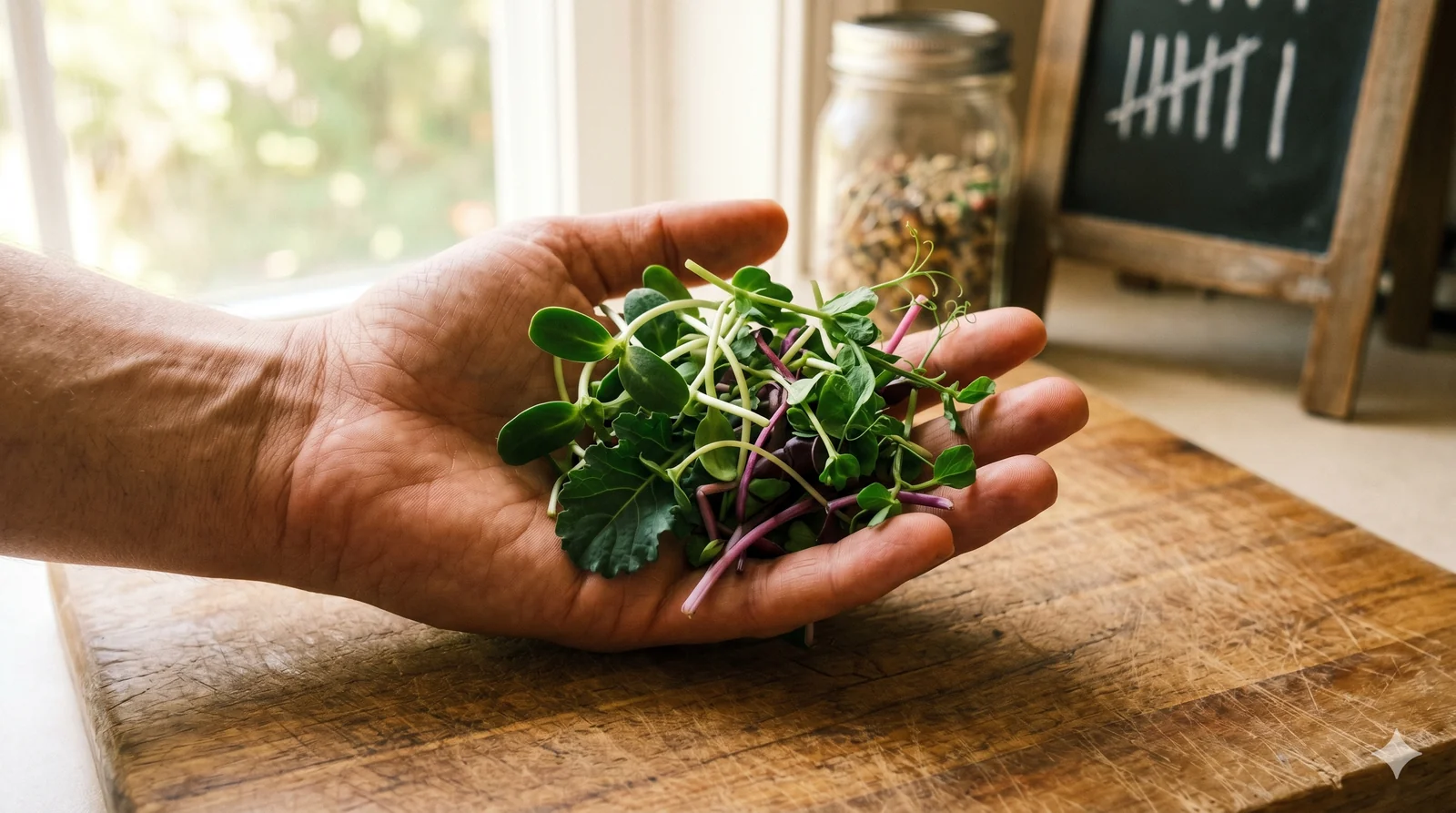
Daily, in moderation. Most adults thrive on 1 to 2 oz (about a small handful) per day. Variety matters more than volume - rotate 3 to 5 types through your week.
You bought microgreens (or you grew a tray) and now you are wondering: do I eat these every single day, or save them for special meals? Are there limits? Will I get tired of them? This guide walks you through exactly how often to eat microgreens, how much, and what to expect long-term.
The Quick Answer
Eat microgreens daily, in modest portions. They are concentrated young vegetables - the same plants you already eat, just younger and more nutrient-dense per gram. Daily intake works because your body absorbs phytonutrients best with consistent, small doses rather than occasional megadoses.
1 to 2 oz / day
About a small handful. That is the sweet spot for most healthy adults.
Why Daily Beats Weekly
Microgreens contain water-soluble nutrients (vitamin C, B-vitamins, polyphenols) that your body cannot store long-term. Eating a giant salad once a week and skipping the rest does not bank nutrition - it just floods your system, and the excess gets flushed out. Daily, smaller portions keep your blood levels steady.
The same logic applies to compounds like sulforaphane (in broccoli microgreens) and chlorophyll. Researchers studying these compounds typically observe benefits in studies where participants consumed them consistently over weeks, not in single large doses. Think of microgreens like brushing your teeth - little bit, every day, beats one massive scrub on Sunday.
How Much Is "Enough"?
Here is the comparison that surprises most people: research from the University of Maryland and others has found that microgreens can contain anywhere from 4 to 40 times more nutrients per gram than their mature counterparts, depending on the variety and nutrient measured.
Visual Comparison
1 oz (28g) of broccoli microgreens delivers a sulforaphane load roughly equivalent to 2 to 2.5 lbs of mature broccoli.
Translation: a small handful in your salad replaces a serving most people would never finish in one sitting.
For most people, 1 to 2 oz daily hits the sweet spot. That is a generous garnish, a smoothie boost, or the green layer in a wrap. You do not need a giant bowl of microgreens. You just need them to actually show up on your plate.
Can You Eat Too Many Microgreens?
Technically yes, but it would take effort. The two things to know:
- Oxalates are present in some greens (notably amaranth and certain spinach-family microgreens). If you have a history of kidney stones, keep these as occasional additions rather than your daily base.
- Glucosinolates in brassicas (broccoli, kale, cabbage, mustard, radish) are healthy in normal amounts but can interfere with thyroid function in extremely high quantities. "Extremely high" means many ounces per day, every day, for months - not a typical handful.
Individual sensitivities also exist. Spicy varieties like radish, mustard, and arugula can cause stomach upset for some people. If a variety bothers you, swap it for something gentler. There is no microgreen you have to eat.
Best Microgreens for Daily Eating
These are the everyday workhorses - mild flavors, broad nutrient profiles, easy to incorporate, and gentle on most digestive systems:
- Sunflower: Nutty, satisfying, full of healthy fats and complete protein. The closest thing to a "salad replacement" microgreen.
- Sweet pea (pea shoots): Crunchy, sweet, mild. Great for kids and skeptics.
- Broccoli: The sulforaphane star. Mild and easy to add to almost anything.
- Radish: A peppery kick - rotate so you are not having it every single day.
Rotating 3 of these gives you variety, balanced nutrition, and a flavor profile that does not get boring.
Best Microgreens for Occasional Use
Some varieties are better as treats - either because they are pricey, intense, or specialty:
- Cantaloupe microgreens: Beautifully sweet and melon-flavored, but expensive and labor-intensive to grow. Save for a special salad.
- Garnet amaranth: Stunning magenta color and earthy flavor, perfect as a garnish on plated dinners. High in oxalates, so use as accent rather than base.
- Wasabi or mustard microgreens: Wonderfully sharp - a little goes a long way.
Pairing Microgreens With Meals
The easiest way to eat microgreens daily is to attach them to meals you already eat. Some practical ideas:
- Breakfast: Toss a handful of broccoli or sunflower into scrambled eggs at the very end of cooking. Blend pea shoots into a smoothie. Top avocado toast with a small pile of greens.
- Lunch: Add radish or mustard microgreens to sandwiches and wraps. Use them as the entire base of a small side salad. Stir into grain bowls.
- Dinner: Garnish soups, tacos, pasta, or pizza after plating. Heat destroys some nutrients, so add them last. Sunflower microgreens pair beautifully with grilled proteins.
What Happens After 30, 60, and 90 Days of Daily Microgreens?
Be realistic: microgreens are not a magic cure. They are a really efficient way to add vegetables to your diet. With that said, here is what people commonly report:
- 30 days: Improved digestion is usually the first thing people notice. Adding 1 to 2 oz of fresh greens daily increases fiber and water intake. Some people report a small energy lift, partly because they are eating more whole food and less processed.
- 60 days: Vegetable intake feels easier. The "I should eat more greens" guilt fades because greens are already on your plate. Cravings for processed snacks tend to soften.
- 90 days: Microgreens become a habit, not a project. You stop thinking about it. You just eat them. This is the goal - sustainable, every-day nutrition that you do not have to negotiate with yourself about.
What microgreens will not do: replace medications, cure chronic disease, or undo a poor overall diet. They are one excellent tool, not a silver bullet.
Storage Tips So You Actually Eat Them Daily
The biggest reason people fail at "daily microgreens" is that they buy a clamshell, eat it twice, and forget about the rest until it wilts. Two ways to fix that:
- Subscribe instead of one-off ordering: A weekly delivery means greens arrive when you need them, not whenever you remember to order. Our subscription is built exactly for daily eaters.
- Grow your own at home: If you have a tray on your counter at all times, you will use them. Our $30 Grow Kit includes everything you need to keep a rolling harvest going.
Stored properly (sealed container, dry paper towel, 38 to 40 degrees F), microgreens stay fresh for 2 to 3 weeks. So a single tray can comfortably cover daily eating for one or two people.
Make daily microgreens effortless
Whether you want fresh greens delivered or you want to grow your own, microGREEN FX has you covered.