📍 Quick Answer
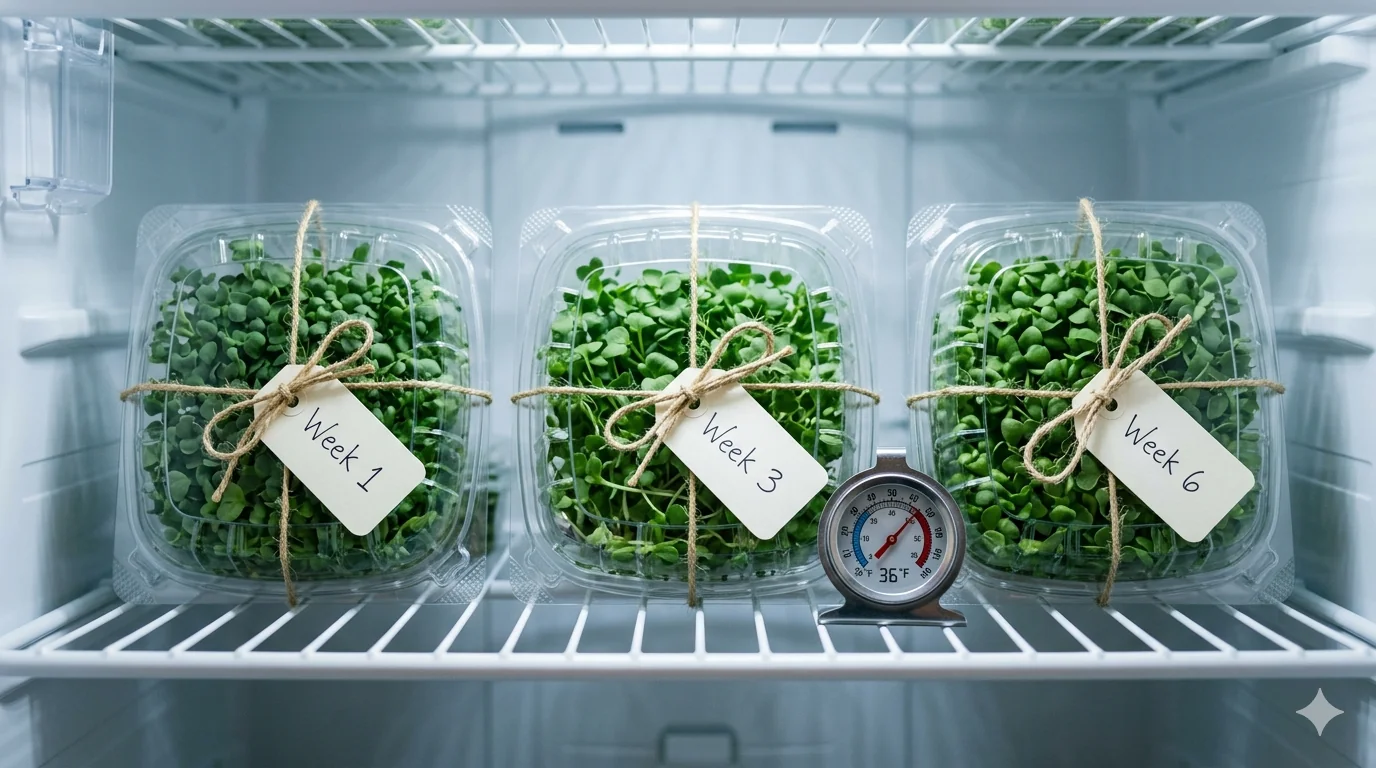
microGREEN FX microgreens last 3-6 weeks because shelf life is built before harvest, not after. We grow with purified water, balanced light and airflow, and a clean soil block, so the plant goes into your fridge with firmer cell walls and lower microbial load. Then we hand-harvest at peak quality, never warehouse, pack into breathable plant-fiber containers, and hold 38-40°F all the way to your refrigerator. Distributor-supplied microgreens skip most of that, and they show it within a week. Clean inputs + careful harvest + same-day delivery + steady cold chain = 3-6 weeks of usable life.
When we tell customers our microgreens last 3-6 weeks, the most common reaction is skepticism. "My grocery store microgreens turn brown in 4 days. How is yours different?" 🌱
The honest answer: shelf life starts long before harvest. The way a microgreen is grown, the water it drinks, and the way it gets cut all decide how long it can stay alive once you take it home. Cold chain matters too, but it can only preserve quality, not create it. The biggest lever is everything we do before the truck even shows up.
What Actually Makes a Microgreen Last 3-6 Weeks 📊
Pre-harvest. The part most people skip.
1. We grow in real dirt, not soilless mats. This is the part most industrial microgreen operations skip, and in our experience it is the single biggest pre-harvest lever on shelf life. We tried the soilless route ourselves, and we have asked and sampled from other microgreen farms running hydroponic and pad-based setups. Every time, the dirt-grown plant held up longer in the fridge. Real, well-drained soil produces firmer cell walls, tighter tissue, and a sturdier stem that stays crisp for weeks. Soilless systems grow faster and pack more trays per square foot, which is why most industrial growers default to them, but the resulting plant is softer and starts wilting within days. Add balanced LED light, consistent airflow, and steady humidity on top of real soil, and the difference compounds.
2. The water the plant drinks. We water with purified water, not chlorinated municipal tap. Chlorine, chloramine, and dissolved sediment stress the root zone, change the microbial balance in the soil, and contribute to faster post-harvest decay. Clean water in means a cleaner plant going into the package, which means a longer life on your shelf. This sounds small. It is not.
3. How we harvest. Same-day, hand-harvested with sanitized blades, in the cool part of the day so internal plant temperature is already low at the cut. A clean, single-pass cut leaves a smaller wound for the plant to seal off. Compare that to industrial mechanical harvesting that crushes stems, multi-day batch cuts, or mid-day harvests at peak heat. Each of those shortcuts shaves days off the final shelf life.
4. No warehouse step. A plant cut today and delivered today is biologically a different product from one cut today and held in a 38°F warehouse for a week before getting trucked. Distributor-supplied microgreens spend 4-15 days between harvest and the grocery shelf, then 2-5 more days on the shelf itself. By the time you take them home, they are 1-3 weeks old. Same-day-harvest direct-to-consumer means the green going into your fridge is 0-1 days old.
Post-harvest. Protecting the quality you already grew.
5. Steady cold chain. The biggest enemy of post-harvest shelf life is temperature swings. Each cycle from cold to warm to cold ruptures cells and speeds wilting. Distributor logistics typically put greens through 4-5 temperature cycles between harvest and your fridge. Direct delivery is one cycle. Harvested at 60-65°F, straight into a 38°F refrigerated vehicle, straight into your refrigerator at 38-40°F.
6. Breathable packaging. PET plastic clamshells trap humidity, and the greens at the bottom of the container start rotting before the ones on top even wilt. Biodegradable plant-fiber packaging breathes, so moisture evaporates evenly and no rot-pocket forms. The packaging is also compostable, which is a side benefit, but the main reason we use it is shelf life.
Each variable on its own only buys a few days. Stacked together, they are the difference between 3-10 days and 3-6 weeks.
How to Extend Shelf Life Even Further at Home 🏠
- Keep them in the original container. Our biodegradable containers are designed for breathability. Transferring to plastic bags or sealed plastic containers traps moisture and shortens life.
- Refrigerate immediately on receipt. If you receive a delivery while away, the cooler bag we leave at your door keeps things cold for several hours, but get them into the fridge as soon as you can.
- Target 38-40°F. If your fridge runs warmer, microgreens will degrade faster. The crisper drawer is usually the coldest spot.
- Avoid over-watering rinses. Pre-rinsing days before use traps moisture. Rinse just before eating.
- Don't freeze. Microgreens are not freezer-stable, the cell walls rupture and the texture is destroyed.
Get Microgreens That Last 3-6 Weeks 🌿
Same-day-harvest microgreens delivered in breathable biodegradable packaging. Free across SE Pennsylvania. PA Preferred certified family farm.