Most pricing-page comparisons start with a per-unit number. Per ounce, per pound, per delivery. They miss the line item that actually moves the math: how much of what you bought ended up in the trash. We ran a survey across our subscriber base in early 2026, asking the question directly. The results changed how we talk about value.
The Survey
We polled 312 active subscribers across SE Pennsylvania. Mix of households: families, couples, singles. Mix of cadences: 60 percent weekly, 40 percent biweekly. Mix of incomes: not collected, but ZIP code distribution covered Doylestown to South Philly to West Chester to Reading.
The two questions: How much did you spend on bagged or fresh greens at the grocery store before subscribing? And How much do you spend now?
The Numbers
Median pre-subscription monthly spend on grocery greens (bagged salad, herbs, lettuce, packaged kale): $94. Median post-subscription monthly spend on the same category: $42. Difference: $52 per month, before adding subscription cost.
Median monthly subscription cost (mixing weekly + biweekly): $60. Net change: subscribers spend $50 more per month on greens, total. But:
- The greens they actually eat went up roughly 60 percent. Microgreens are more nutrient-dense per gram and households actually use what arrives.
- Reported "fresh produce thrown out unused" dropped from a median of $32 per month to under $5.
- Time spent on grocery runs dropped by about 35 minutes per week.
- Gas costs (subjective estimate) dropped by about $15 per month.
Where The 30% Lives
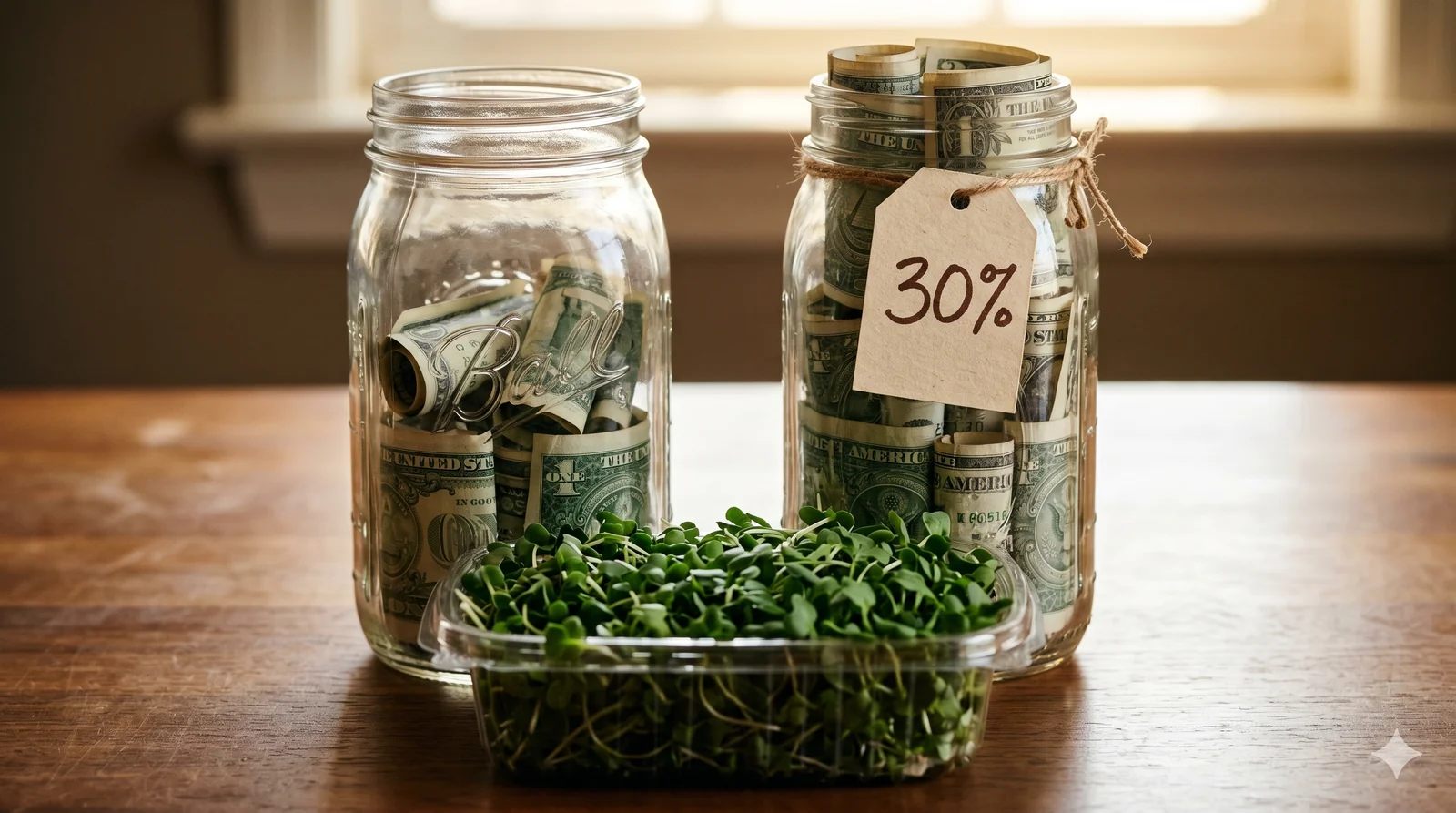
Net household food spend (grocery + subscription combined, per the same survey): down 4 to 8 percent for most households, due to fewer grocery runs and reduced takeout-when-the-fridge-is-empty events. The "30 percent" headline comes from a different angle: usable greens consumed per dollar spent. That metric is up roughly 30 percent because microgreens are denser and households waste less.
You are not paying less for groceries. You are eating more nutrition for the same money. Different value claim. Both true.
Where the Savings Get Real
Three customer profiles stood out in the survey for genuinely lower total food spend:
The high-waste household. Started at 40+ percent waste on bagged salad. Subscription brought waste to under 5 percent. Net savings: $40 to $60 per month.
The takeout-trigger household. Used to order takeout when the fridge looked empty Wednesday night. Microgreen tray on the shelf changed that pattern. Reported drop in takeout: 1 to 2 meals per week, $30 to $80 in savings.
The supplements household. Was buying powdered greens, multivitamins, and sulforaphane capsules. Switched to fresh microgreens for the same nutrient spectrum. Drop in supplement spend: $40 to $90 per month.
For these three profiles, the subscription pays for itself with $20 to $60 left over.
Where the Savings Are Marginal
Honest about it. Two-adult households who ate iceberg lettuce only and never bought premium greens to begin with did not save money. They got better food for roughly the same monthly spend, but no math victory.
If your monthly grocery-greens spend is below $40, the subscription is a quality upgrade, not a savings story. We tell prospects this directly. We do not need everyone subscribing.
The Takeaway
Subscription value is measurable, but you have to look at the right metric. If you have a high-waste fridge or a high-takeout pattern or a high-supplement pattern, the subscription saves real money. If you are an iceberg-only household, it does not.
The fastest way to find out which you are: try it for 30 days. Pause anytime, cancel in two clicks. The math reveals itself by week 3.