📍 Quick Answer
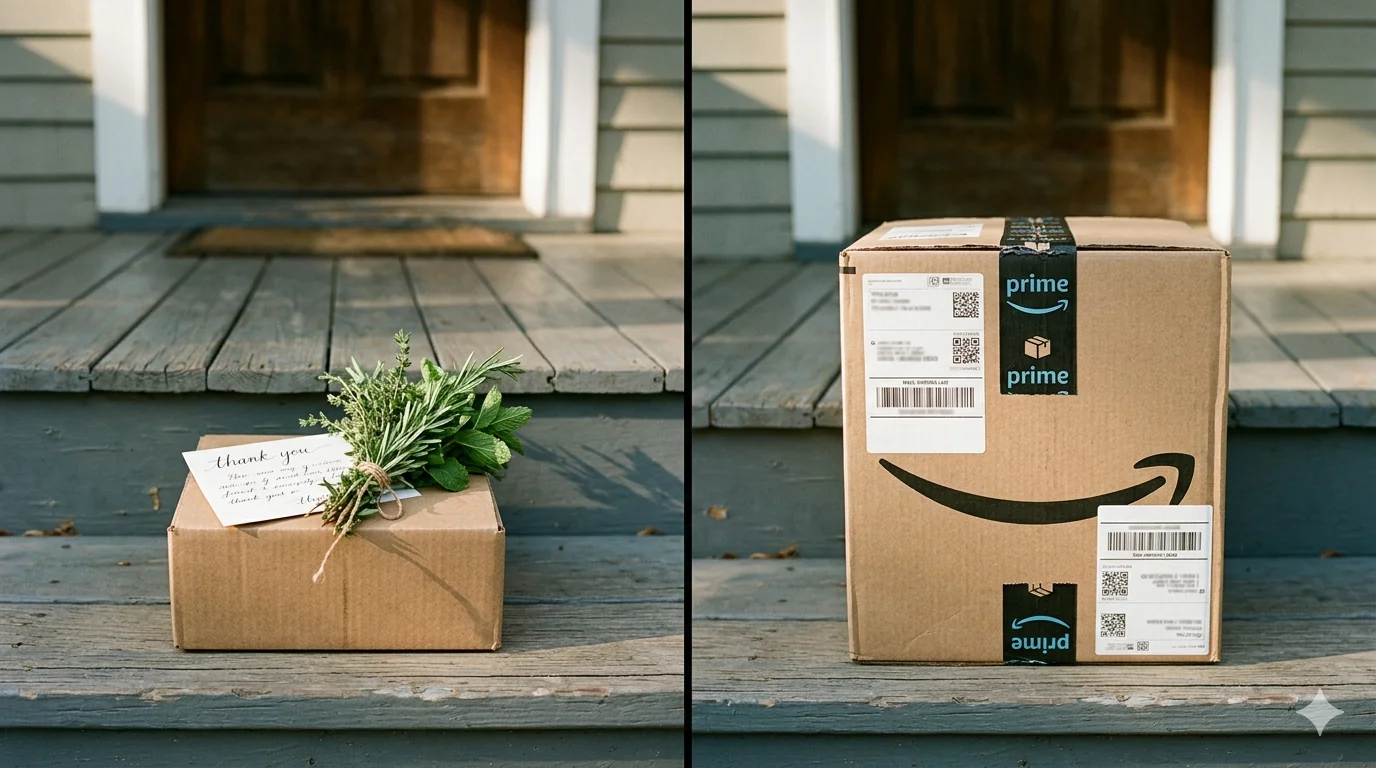
Local farm-direct microgreens delivery beats Amazon Fresh and Instacart on freshness, shelf life, packaging sustainability, and per-ounce cost on subscription. Amazon Fresh microgreens travel through 2 to 3 warehouses before reaching you, with shelf life of 1 to 6 days remaining at delivery. Local farm-direct from microGREEN FX has 6 weeks remaining shelf life, plastic-free packaging, and lower per-ounce cost on subscription. Amazon still wins on convenience for occasional users and on integration with grocery orders.
Amazon Fresh and Instacart are excellent for shelf-stable products. They are decent for most produce. They are a bad fit for microgreens specifically. Here is why. 🆚
A microgreen tray loses measurable nutrient density within 24 hours of cut. The Amazon Fresh supply chain is built around 3 to 5 day fulfillment from supplier to customer. By the time a clamshell of microgreens arrives at your door from Amazon, it has been through 2 to 3 warehouse handoffs.
This is not Amazon's fault. The infrastructure was built for products that do not lose quality by the hour. Microgreens specifically need a different supply chain. That is what farm-direct delivery is.
The Supply Chain Mismatch 📦
- Amazon Fresh / Instacart microgreens: Producer ships to Amazon distribution center → regional Amazon Fresh warehouse → last-mile delivery. Total 2 to 5 days, often longer for microgreens specifically since they are low-volume items in mixed orders.
- Whole Foods through Amazon Fresh: Producer ships to Whole Foods distribution → store backroom → mixed delivery. Slightly faster but the producer side is still long-distance California greenhouses for most stocked microgreen brands.
- Local farm-direct: Cut on the farm → packaged within 30 minutes → loaded on delivery van → at your door in hours. Total 4 to 8 hours.
What Each Wins On 🏆
Amazon wins on: Same-day or next-day delivery for occasional users, integration with existing grocery orders, broad geographic reach, return policy on damaged items, no commitment beyond the single order.
Local farm-direct wins on: Freshness (cut hours ago vs cut days ago), shelf life (6 weeks vs days), packaging (biodegradable vs plastic clamshell), per-ounce cost on subscription, relationship with the grower, support of local economy.
Tie: Convenience for setting up the recurring order. Both platforms make recurring delivery easy.
When Amazon Is Still the Right Choice ✅
- You eat microgreens once a month or less. Subscription does not make sense at that frequency. Amazon Fresh on demand is the right call.
- You are outside our delivery zone. If we do not deliver to your address, Amazon or Whole Foods is the next-best option. Check our delivery page first.
- You need them by tomorrow. Our routes run Tuesday and Friday. If you need microgreens on a Wednesday, Amazon Fresh same-day delivery is faster than waiting for our Friday route.
- You only need them once. If a recipe calls for microgreens for a specific dinner party, Amazon for a one-off package is the right call. Subscription is for regular eaters.
When Local Wins Decisively 🌾
- You eat microgreens 2+ times per week. The subscription cost-per-ounce is materially lower and the freshness gap matters more.
- You care about packaging. Amazon ships microgreens in plastic clamshells inside a cardboard box. Local farm-direct uses biodegradable containers, no plastic.
- You want variety rotation. Amazon stocks 3 to 5 microgreen varieties. Our farm rotates 27+. Subscription members can request variety mixes Amazon literally cannot stock.
- You want to know who grew it. Local farm-direct means you can email Sergio or Celine, visit the farm, take a class. Amazon means you have no relationship with the grower.
A Few Calibrating Questions 🤔
- How often do you actually eat microgreens, weekly or monthly?
- Do you care about plastic packaging on the produce you buy?
- Have you ever opened an Amazon Fresh microgreen package and been disappointed by how soft or yellow it was on arrival?
- Are you within our SE PA delivery zone? If yes, the math changes meaningfully.
- Would you rather build a relationship with a local farm or keep your microgreens in your existing Amazon order?
Try the Local Side 🌿
Start a 2-week trial subscription. If it does not measurably beat Amazon for your kitchen, cancel and we wish you well.