⚠️ A Quick Note
We are a family-run microgreens farm in Schwenksville, PA - not a medical clinic. The research and nutrient data below are presented for general educational purposes. Microgreens are food, not medicine, and they should complement (not replace) advice from your doctor, registered dietitian, or other licensed healthcare provider. Always consult a qualified professional before making dietary changes to address a specific health condition - especially if you are pregnant, breastfeeding, taking medications, or managing a chronic illness.
📍 Quick Answer
For weight loss, the best microgreens are the ones that are nutrient-dense, low-calorie, and high in fiber - which describes most of them. Standouts include sunflower (high in healthy fats and protein for satiety), pea shoots (sweet and fiber-dense), broccoli (sulforaphane plus cruciferous-family metabolic effects), and radish (filling crunch for low calories). One ounce of microgreens delivers up to 40x the nutrients of mature vegetables (USDA research, Xiao et al., 2012) at minimal calorie cost. This is supportive nutrition, not a weight-loss program.
The weight-loss food industry sells you a lie that some specific food will burn fat or boost your metabolism. There is no such food. What the actual research on sustainable weight loss tells you is much less marketable: eat in a calorie deficit, get enough protein, eat plenty of fiber, prioritize foods that keep you full per calorie, and stick with it for a long time. ⚖️
Microgreens fit that framework cleanly. They are low-calorie. They are high-fiber. They are nutrient-dense at a level that lets you feel "full" on fewer calories. They can be added to almost any dish without changing the dish's structure - meaning they integrate into existing eating habits instead of requiring an entirely new meal plan.
That is a different and more honest pitch than "this superfood melts fat." Here is what actually shows up in the research and how to use microgreens in a weight-loss eating plan.
Best Microgreen Varieties for a Weight-Loss Plan 🌱
Different microgreens fit different weight-loss eating styles. Here is the matching:
- Sunflower - higher in healthy fats and protein than most microgreens. Adds satiety to salads and grain bowls.
- Pea Shoots - sweet flavor without sugar. Great for satisfying carb cravings.
- Broccoli - sulforaphane + cruciferous metabolic profile.
- Radish - peppery crunch for very low calories. Adds volume to plates.
- Kale & Dino Kale - high fiber, cruciferous family.
- Arugula - sharp flavor that makes "diet salads" not feel like diet salads.
How to Actually Use Microgreens for Weight Loss 🥗
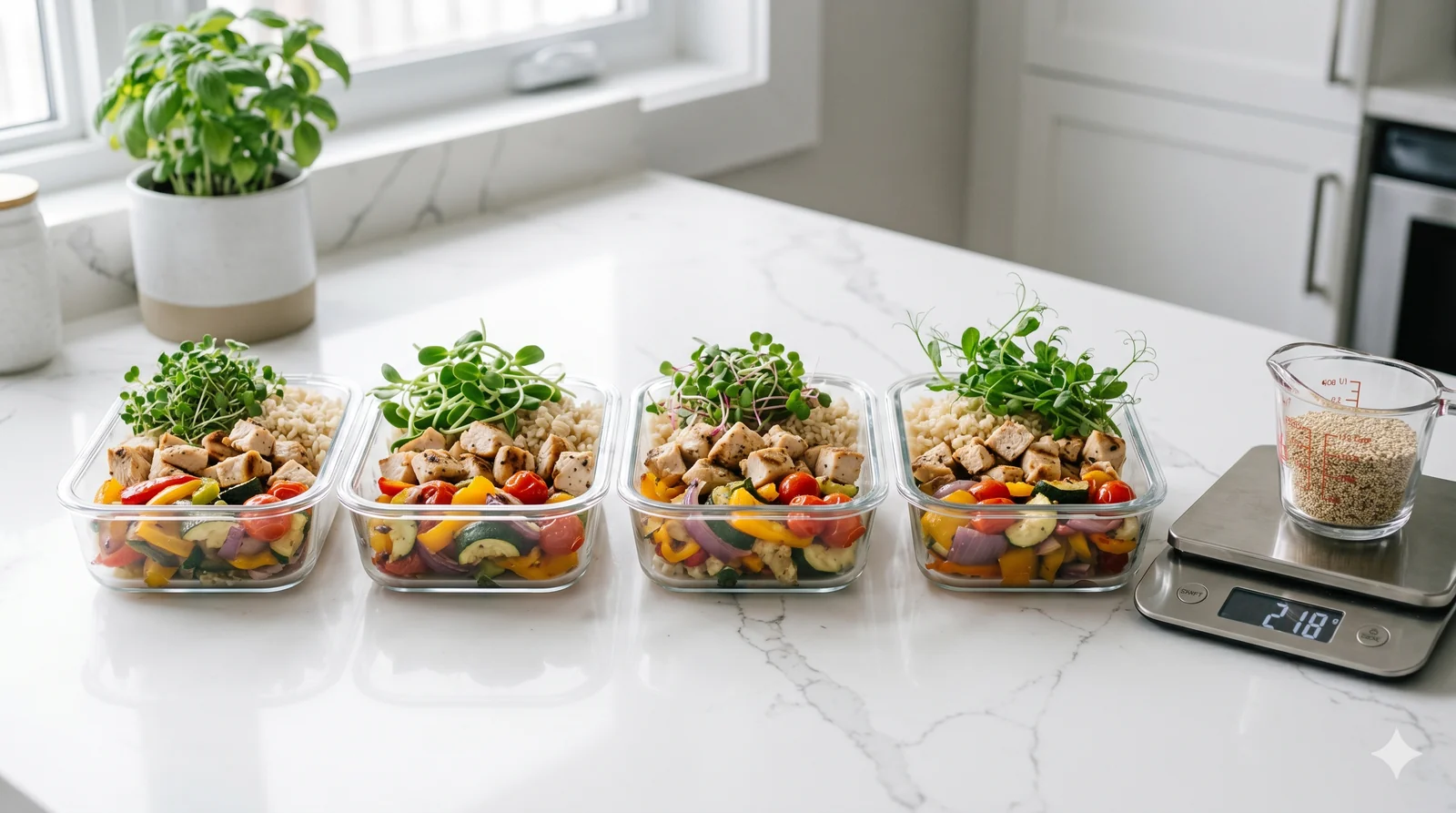
Add, do not substitute. The biggest mistake people make is "I will replace my meal with microgreens." That sets you up for hunger and rebound eating. Instead, add 1-2 ounces of microgreens to whatever you are already eating - sandwiches, soups, salads, breakfast bowls, smoothies, eggs.
Eat them with protein and fat. Microgreens on top of a protein-rich meal fill you up at a much lower calorie cost than the same calories of bread or rice.
Eat them raw, often. The cancer-prevention research on raw cruciferous microgreens (sulforaphane activation) is also relevant for the metabolic effects in weight-loss eating.
What Research Says About Microgreens and Weight 📚
Microgreens contain up to 40 times more nutrients per gram than the mature plant equivalent (Xiao et al., 2012, Journal of Agricultural and Food Chemistry). For weight-loss eating, this means you can hit micronutrient targets without consuming high-calorie foods.
Cruciferous vegetables (broccoli, kale, cabbage, etc.) are consistently associated with lower BMI and reduced obesity risk in cohort studies (Rauma & Mykkänen, 2000, and follow-up research).
Fiber from leafy greens contributes to satiety and slows glucose absorption, both of which support weight-loss eating patterns (numerous reviews in American Journal of Clinical Nutrition).
A 2018 review in Nutrients noted that "high-volume, low-energy-density foods" (which describes microgreens) are associated with reduced overall caloric intake at meals - a key mechanism for sustainable weight loss.
📚 Cited Research
- Xiao Z, et al. (2012). Assessment of vitamin and carotenoid concentrations of emerging food products: edible microgreens. Journal of Agricultural and Food Chemistry.
- Rauma AL, Mykkänen H. (2000). Antioxidant status in vegetarians versus omnivores. Nutrition.
- Sun J, et al. (2013). Profiling polyphenols in five Brassica species microgreens. Journal of Agricultural and Food Chemistry.
- Rolls BJ. (2009). The relationship between dietary energy density and energy intake. Physiology & Behavior.
Build Your Weight-Loss Plate Around Real Greens 🌿
Same-day-harvest microgreens delivered free across SE Pennsylvania. Sunflower, pea shoots, broccoli, radish, kale, arugula - the most useful varieties for a sustainable eating plan.