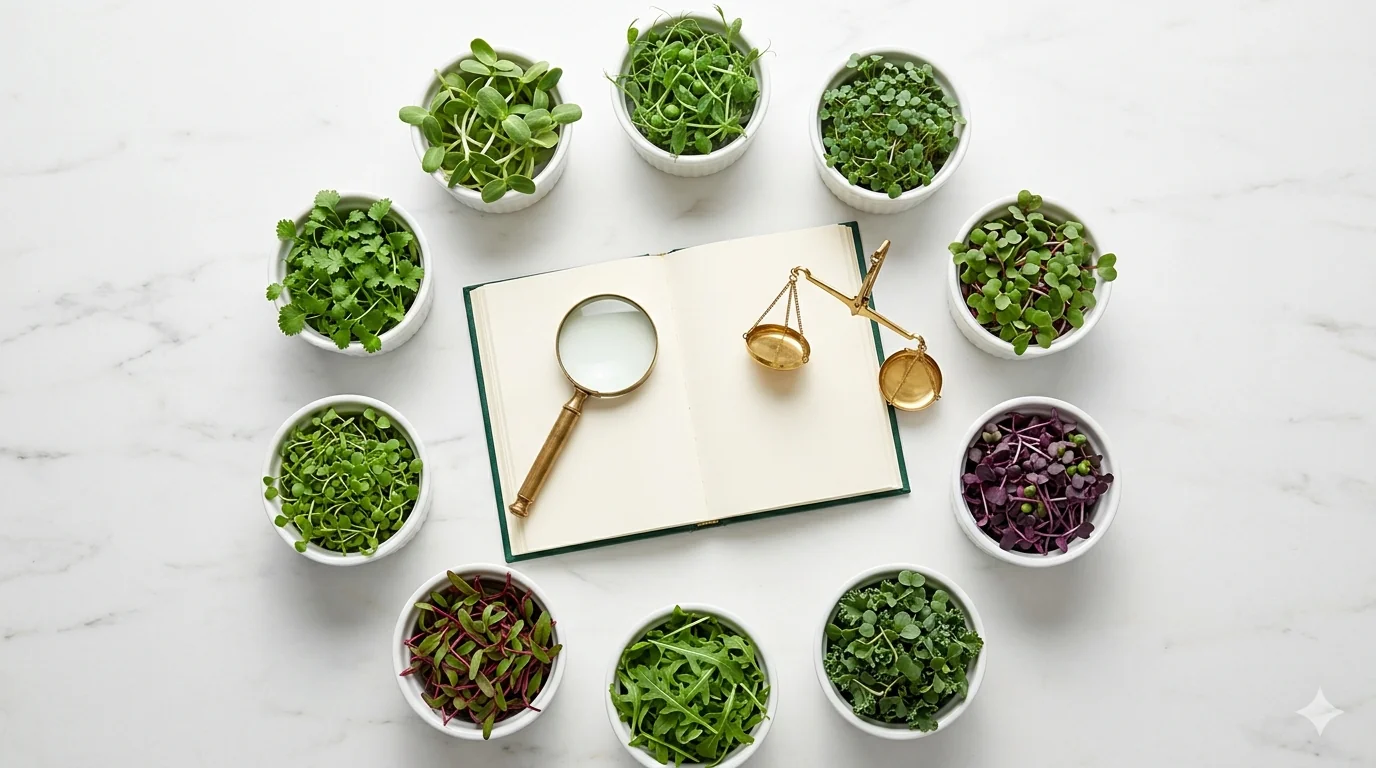
Microgreens have moved from fancy restaurant garnish to nutritional powerhouse in less than a decade, and the research behind that shift is impressive. A landmark 2012 USDA-funded study by Xiao and colleagues at the University of Maryland (published in the Journal of Agricultural and Food Chemistry) tested 25 varieties of microgreens and found that most contained 4 to 40 times more vitamins and antioxidants than the same plants grown to full size. That single paper put microgreens on the radar of nutrition scientists worldwide.
Since then, follow-up studies from Johns Hopkins, Texas A&M, and research groups in Iran and Italy have backed up the hype with hard data on cholesterol, blood sugar, eye health, and inflammation. Microgreens are not a fad. They are a concentrated, real-food source of compounds your body uses to repair, defend, and thrive.
Below are the top 10 evidence-backed health benefits of microgreens, ordered roughly by the strength of the supporting research. For each one, we name the study, the mechanism, the varieties richest in that nutrient, and a simple way to actually eat them.
Quick Reference - The 10 Benefits
- 4-40x more nutrients than mature vegetables
- Sulforaphane for cancer defense
- Lower LDL cholesterol and better heart health
- Anti-inflammatory phytochemicals
- Eye health (lutein and zeaxanthin)
- Better blood sugar control
- High protein density
- Anthocyanin antioxidants
- Vitamin K, A, C, and E boost
- Gut health and fiber, without the calorie load
1. Up to 40x More Nutrients Than Mature Vegetables
The headline benefit. The 2012 study by Xiao et al. analyzed 25 commercially produced microgreens for vitamin K1, vitamin E (tocopherols), vitamin C (ascorbic acid), and beta-carotene. The result: microgreens were dramatically more nutrient-dense than their mature counterparts, with red cabbage microgreens topping the chart at roughly 40 times more vitamin E and 6 times more vitamin C than mature red cabbage. Cilantro, garnet amaranth, and green daikon radish microgreens also outperformed adult plants by wide margins.
The mechanism is simple. A seedling carries the nutritional reserves needed to fuel the entire plant\'s growth, packed into a tiny shoot. By harvesting at 7 to 14 days, you capture that nutrient peak before it dilutes across stems, fibers, and water-heavy leaves.
Richest varieties: red cabbage, garnet amaranth, cilantro.
How to eat it: toss a handful on top of a finished pasta dish or grain bowl right before serving.
2. Sulforaphane - The Cancer-Fighting Compound
Broccoli microgreens are the most-studied microgreen on the planet, and the reason is sulforaphane. Researchers at Johns Hopkins led by Paul Talalay and Jed Fahey first reported in 1997 (Proceedings of the National Academy of Sciences) that 3-day-old broccoli sprouts contained up to 100 times more glucoraphanin (the precursor to sulforaphane) than mature broccoli heads. Sulforaphane activates the body\'s Nrf2 pathway, which upregulates dozens of detoxification and antioxidant enzymes.
Subsequent research has linked sulforaphane to reduced markers of cellular damage, improved liver detoxification, and lab-based evidence of slowing cancer cell growth. It does not "cure" cancer, but it is one of the most studied chemoprotective compounds in the plant kingdom.
Richest varieties: broccoli, kale, daikon radish (all brassicas).
How to eat it: raw on avocado toast or stirred into cool dips like hummus. Heat destroys the myrosinase enzyme that activates sulforaphane.
3. Heart Health and Lower LDL Cholesterol
A 2016 study by Huang and colleagues, published in the Journal of Agricultural and Food Chemistry, fed obese mice diets supplemented with red cabbage microgreens. The microgreen-fed group showed lower LDL ("bad") cholesterol, lower triglycerides, and reduced markers of liver inflammation compared to controls fed mature red cabbage. The researchers credited the higher concentration of polyphenols and glucosinolates found in the young plants.
Heart-healthy compounds in microgreens include polyphenols, anthocyanins, vitamin K (critical for arterial flexibility), and nitrates that support healthy blood pressure. While most studies are still in animal models or small human trials, the consistent direction of the evidence is encouraging.
Richest varieties: red cabbage, red acre, broccoli.
How to eat it: blend a handful into a daily smoothie with berries and unsweetened yogurt.
4. Anti-Inflammatory Phytochemicals
Chronic low-grade inflammation is a root contributor to heart disease, diabetes, and many autoimmune conditions. Microgreens are loaded with phytochemicals that researchers have shown to dampen inflammatory pathways: sulforaphane (Nrf2 activation), anthocyanins (NF-kB inhibition), and carotenoids that quench free radicals before they trigger inflammatory cascades.
A 2021 review in the journal Antioxidants summarized multiple in vitro and animal studies demonstrating that microgreen extracts reduced inflammatory markers like TNF-alpha and IL-6. Eating a variety of colorful microgreens gives you a broad spectrum of these compounds in every bite.
Richest varieties: broccoli, red cabbage, arugula, mustard.
How to eat it: mix into a yogurt-based dressing for a fresh, peppery salad topper.
5. Eye Health - Lutein and Zeaxanthin
Lutein and zeaxanthin are two carotenoids that concentrate in the macula of the eye, where they filter blue light and reduce oxidative stress on the retina. Higher dietary intake is consistently linked to lower rates of age-related macular degeneration in observational studies. The Age-Related Eye Disease Study (AREDS2) confirmed that lutein and zeaxanthin supplementation slowed AMD progression.
Sunflower and sweet pea microgreens are particularly rich in these carotenoids per gram. Their bright green color is a visual cue for the carotenoid load. Eating microgreens regularly is one of the simplest food-first ways to support long-term vision.
Richest varieties: sunflower, sweet pea, kale.
How to eat it: pile sunflower microgreens onto a sandwich or wrap in place of lettuce.
6. Better Blood Sugar Control
A 2012 randomized controlled trial led by Bahadoran and colleagues, published in the International Journal of Food Sciences and Nutrition, gave type 2 diabetic patients 10 grams of broccoli sprout powder per day for 4 weeks. The treated group saw significant reductions in serum insulin, insulin resistance (HOMA-IR), and oxidative stress markers compared to placebo.
Sulforaphane appears to improve insulin sensitivity by reducing hepatic glucose production. While these studies focused on sprouts, microgreens are essentially the next growth stage and contain similar (often greater) sulforaphane levels. Pairing microgreens with carb-heavy meals may help blunt blood sugar spikes.
Richest varieties: broccoli, daikon radish, kale.
How to eat it: add a handful to a rice or grain bowl to balance the meal.
7. High Protein Density
Most people do not think of greens as a protein source, but pea microgreens are an exception. Sweet pea shoots are roughly 20 percent protein by dry weight, with a complete amino acid profile that includes all nine essentials. They also deliver iron, folate, and vitamin C, which improves the absorption of plant-based iron.
For vegetarians, vegans, or anyone trying to reduce reliance on animal protein, sweet pea microgreens are a smart, low-calorie addition to meals. Sunflower microgreens also provide a meaningful protein boost along with healthy fats.
Richest varieties: sweet pea, sunflower, fenugreek.
How to eat it: stir-fry pea shoots for 30 seconds with garlic and sesame oil as a side dish.
8. Anthocyanin Antioxidants - Color Equals Nutrition
Anthocyanins are the pigments that give red cabbage, purple radish, and garnet amaranth their dramatic color. They are also among the most powerful antioxidants in the food supply, linked in observational studies to reduced risk of cardiovascular disease, cognitive decline, and certain cancers. The deeper and more vivid the color, the higher the anthocyanin content.
A 2020 study in the journal Food Chemistry measured anthocyanin levels in red cabbage microgreens and found concentrations several times higher than mature red cabbage. The same trend held for radish and amaranth microgreens. If your plate looks beige, you are missing out.
Richest varieties: red cabbage, purple radish, garnet amaranth.
How to eat it: use as a vibrant garnish on tacos, soups, or grain bowls for instant color and antioxidant boost.
9. Easy Vitamin K, A, C, and E Boost
A small handful of microgreens delivers a meaningful percentage of your daily needs for several key fat- and water-soluble vitamins. Vitamin K supports healthy bones and arterial function. Vitamin A (from beta-carotene) supports vision and immunity. Vitamin C aids collagen production and iron absorption. Vitamin E protects cell membranes from oxidative damage.
Because microgreens pack so much micronutrition into so little volume, they are an efficient way to fill nutritional gaps for people who struggle to eat large quantities of vegetables. One ounce of red cabbage microgreens provides more vitamin E than a cup of mature spinach.
Richest varieties: kale (vitamin K), carrot tops (vitamin A), broccoli (vitamin C), red cabbage (vitamin E).
How to eat it: top scrambled eggs or an omelet with a small mound of microgreens. Fat from the eggs helps absorb the fat-soluble vitamins.
10. Gut Health and Fiber Without the Calorie Load
Microgreens deliver fiber and plant compounds that feed your gut microbiome without piling on calories. Sulforaphane and other glucosinolates, plus polyphenols from colorful varieties, act as prebiotic-like substrates that beneficial gut bacteria use to produce short-chain fatty acids - compounds that strengthen the gut barrier and reduce systemic inflammation.
A 2021 study in Frontiers in Nutrition found that mice fed broccoli microgreens showed improved gut microbiome diversity and reduced markers of intestinal inflammation. While human research is still emerging, the trend matches everything we know about whole-food, plant-rich diets and gut health.
Richest varieties: broccoli, mustard, arugula, radish.
How to eat it: stir into bone broth or a light vegetable soup at the end of cooking - warm but not heat-damaged.
How to Add Microgreens to Your Daily Diet
The biggest mistake people make with microgreens is treating them as a special-occasion food. They work best as a daily habit. Here are the easiest ways to make 1 to 2 ounces of microgreens part of your routine without changing what you already eat.
- Smoothies: a small handful of pea shoots or broccoli microgreens disappears into a fruit smoothie - no flavor change, full nutrition.
- Sandwiches and wraps: swap lettuce for sunflower or pea microgreens. More flavor, more crunch, more nutrients.
- Salads: use microgreens as the base or mix with regular greens for a 10x nutrient upgrade.
- Eggs: top scrambled eggs, omelets, or avocado toast with broccoli or radish microgreens after plating.
- Soups and bowls: add as a finishing garnish to ramen, pho, grain bowls, or chili. Heat from below, fresh greens on top.
- Pizza and tacos: a fistful of arugula or radish microgreens after the oven adds peppery brightness and fresh nutrition.
The general rule: add microgreens at the end, not during cooking. They are at their nutritional peak raw or barely warmed, and most of the heat-sensitive compounds (especially sulforaphane and vitamin C) survive when added last.
Want microgreens in your kitchen this week?
If you live in southeastern Pennsylvania, microGREEN FX delivers fresh microgreens to your door the same day they are harvested - peak nutrition, peak flavor. Or grow your own at home with our beginner-friendly Grow Kit.