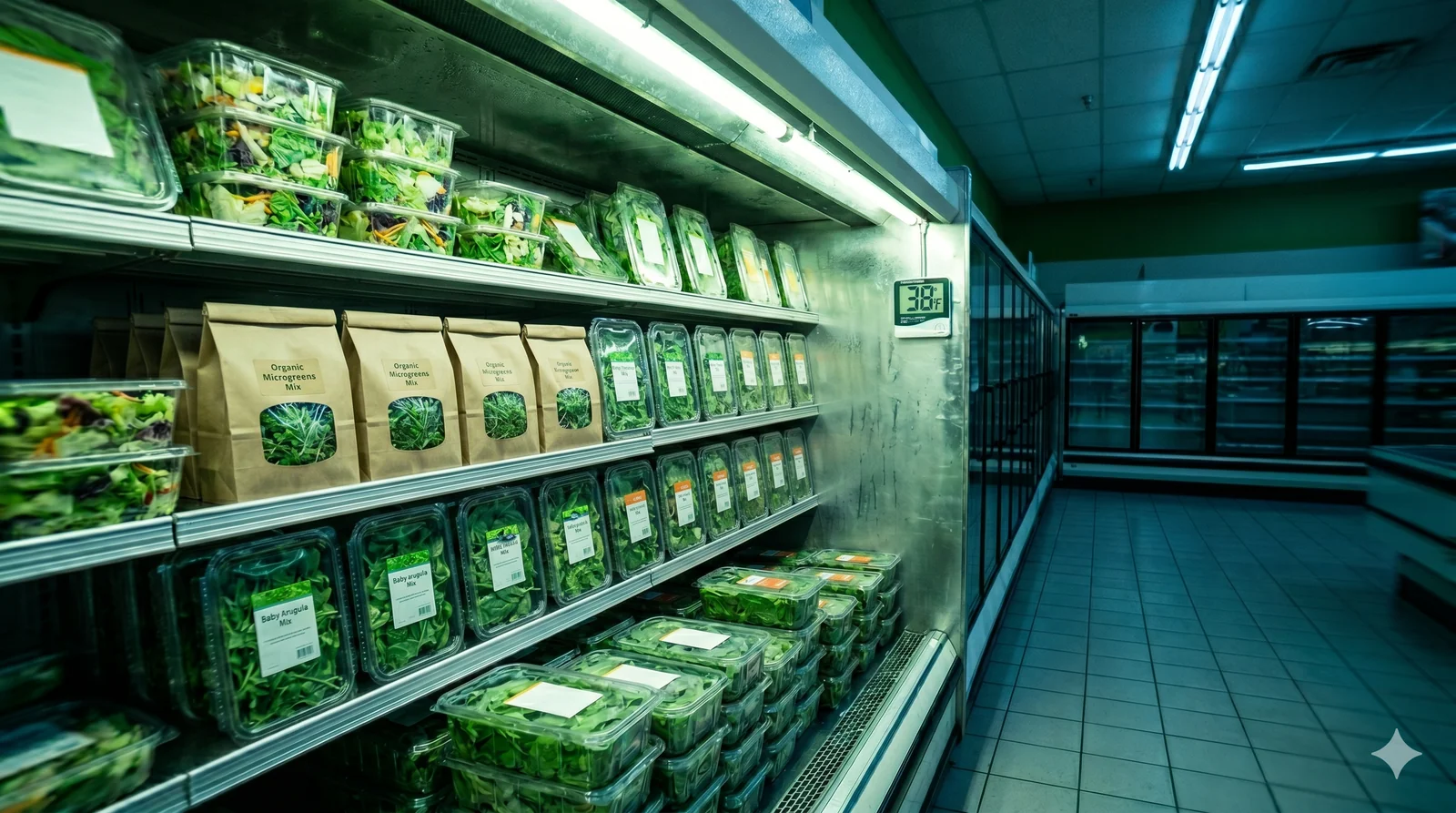
The bagged-salad section at any major grocer is a logistics victory. It is not a freshness story. The lettuce on the shelf today was cut between 4 and 12 days ago, depending on origin. Most of it is from the Salinas Valley in California or the Yuma Valley in Arizona. The leaves rode a refrigerated truck across the country, sat in a regional distribution center, then came to your local store.
Along the way, the producer ran a chlorine-water wash to control bacterial bloom, sealed the leaves inside a clamshell or bag flushed with a modified-atmosphere gas mixture (typically nitrogen-heavy with reduced oxygen), and printed a sell-by date that buys back as much shelf time as USDA rules allow.
None of that is illegal. None of it is even unusual. It is the only way the supply chain works at scale. But "fresh" is not the right word.
What Happens to a Leaf in 8 Days
Plant cells continue respiring after harvest. They consume their own sugars, lose water through cuticle breakdown, and accumulate ethylene that accelerates senescence. By day 4 the cell walls have softened. By day 8 the leaf has lost 20 to 30 percent of its initial vitamin C content and most of its volatile aroma compounds. By day 12 the salad you see on the shelf is the part of the production run that beat the spoilage curve. The losses got pulled or composted.
The salad you bring home and eat on day 14 from harvest is not nutritionally equivalent to the salad cut yesterday. It is a different food.
Why a Subscription Changes the Variable
microGREEN FX cuts every tray the morning of delivery. From cut to your door is under 8 hours. The plant cells have not started the breakdown cascade. The vitamin C is intact. The chlorophyll is bright. The texture is firm. The fridge holds them for 10 to 14 days because they had nothing degrading them in transit.
That is not a marketing flourish. It is the difference between a same-day-cut tray and a 12-day-old supermarket package. Run the comparison once and the bagged salad becomes hard to look at.
The Other Things You Are Paying For
The supermarket green has a chlorine wash you cannot taste, a gas blend you do not see, a clamshell with a 9 percent recycling rate at best, and a 1,800-mile carbon footprint. Cheap on the receipt. Expensive when you total the externalities.
The subscription substitute has a same-day cut, no chemical wash, a biodegradable container that goes in the compost, and a route the truck was already driving. The price-per-ounce comparison was never apples to apples.
What This Argues
If you are buying greens to fill a bowl, the supermarket bag works. If you are buying greens because you want the nutrition, the freshness, and the food integrity that the word "fresh" used to mean, the supermarket bag is the wrong shelf to read.
Subscription delivery from a local farm is not a premium upgrade. It is closer to what the supermarket is implying it sells.