📍 Quick Answer
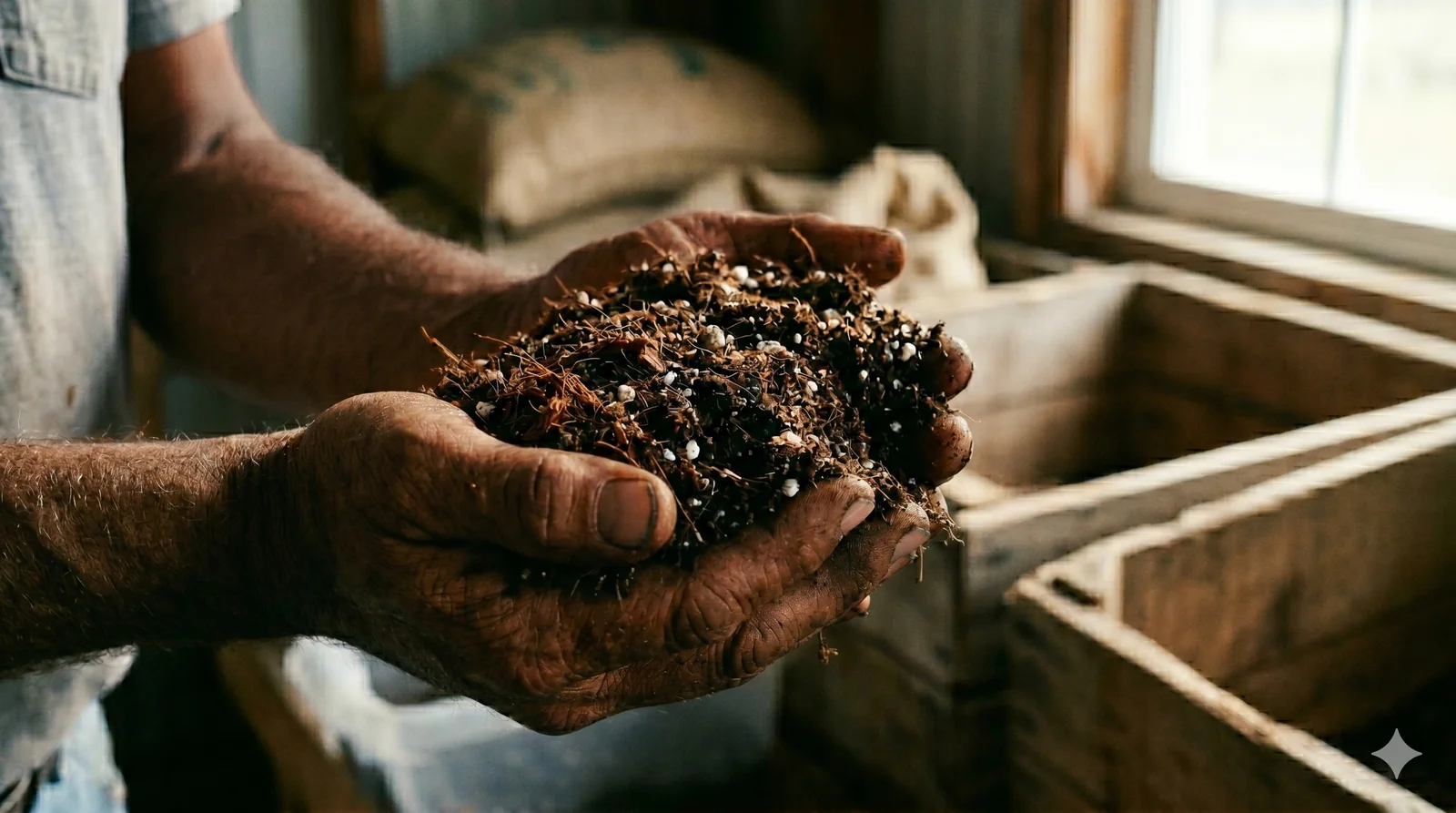
MicroThrive Soil™ is a proprietary peat-free, petroleum-free growing substrate developed in-house at microGREEN FX. The blend is tuned to maximize microgreen growth with minimal damage to the ecosystem. We have made our own soil from the first tray we ever planted, and the current peat-free formulation has been our standard since early 2022.
We Made Our Own Soil From Day 1 🌱
Most commercial microgreen farms use the same handful of bagged commodity mixes off a delivery truck (PRO-MIX HP, Sunshine Mix, Berger BM-2, Fafard 3B). Convenient, consistent, designed for general nursery use. Most farms scoop, sow, harvest. Done.
We took a different path from the first season. Microgreens are not nursery seedlings. They live for 8 to 15 days, get harvested at the cut, and need a substrate tuned to that short window. So we built our own blend, and we have refined it every season since. The MicroThrive Soil you see in our trays today is years of trial-and-error, not a sticker on someone else's bag.
Why Peat Was In the Early Blend 🪴
For the first stretch of our farm life, peat moss was a component of our blend. We used it for the same reason most growers do: it is cheap, holds water consistently, and does not bring complications to a small-scale operation that has bigger problems to solve.
We were not blind to the broader peat conversation. We just had not done the homework yet on what peat actually costs the ecosystems it comes from. The trays were growing. The microgreens were great. The soil component felt like a settled question.
What Changed Around the Start of 2022 🌍
Around the new year heading into 2022, the peat conversation hit hard. The UK announced a phased ban on peat in retail compost. EU growing-media producers were scrambling to reformulate. The data on peatland loss was no longer behind a paywall, it was on the front of the agricultural trade press.
Three numbers in particular stuck:
- Peat takes roughly 1,000 years to form one meter of bog. Commercial peat extraction strips it at 1 to 4 centimeters per year. The ratio is not close.
- Drained peatlands release approximately 1.9 gigatonnes of CO₂ per year, around 5 percent of all human-caused greenhouse emissions. Most consumers have no idea.
- Peatlands host specialized wildlife (curlew, golden plover, large heath butterfly) that cannot relocate when their habitat is dredged. The biodiversity loss is permanent.
We covered the full picture in our peat moss post. The short version: every tray that uses peat funds the next bog being drained.
Once we had read the research, the decision made itself. We pulled peat out of the blend, tested replacements, ran trays in parallel until we matched and then exceeded the performance of the peat-containing version. Every tray we have grown since early 2022 has been peat-free.
What MicroThrive Soil Is Today 🛠️
A proprietary blend that maximizes microgreen growth with minimal damage to the ecosystem. The formulation is private. What we will say:
- Every component is renewable or a recycled byproduct.
- None of it is peat. None of it is petroleum-based. None of it is sourced from suppliers that cannot document their supply chain.
- The blend is tuned specifically for the 8 to 15 day microgreen growth window, not for general nursery use.
- It is consistent batch to batch because we control the formulation.
We do not publish the recipe.
Why It Matters in Your Tray 🌿
- Shelf life: our microgreens hold 3 to 6 weeks in your fridge. Typical commercial microgreens grown in commodity peat blends hold 3 to 10 days.
- Flavor: customers consistently report cleaner, more vibrant taste than supermarket microgreens. We attribute that partly to the soil and partly to same-day harvest.
- Yield: commercial-scale yield per tray. We did not sacrifice productivity for sustainability.
Want to Grow With It at Home? 🏡
We sell MicroThrive Soil to home growers in two formats:
STARTER
MicroThrive Soil + Seed Pack
10-pack of pre-portioned soil + matching seed packs. Enough for 10 home trays. Perfect if you already have trays and want the soil that does the heavy lifting.
$30
Order →EVERYTHING YOU NEED
Deluxe Grow Kit
Soil, seeds, trays, instructions, our microgreen ebook, and free Freemium access to GLAP (our growing app) so you grow like a pro instead of guessing your way through.
See the Kit →Either path uses the same MicroThrive Soil that goes into the commercial trays we deliver across SE Pennsylvania.
Why We Tell the Real History 🤝
We could have written this article as if MicroThrive Soil rolled out peat-free from day 1. The truth is we used peat for a stretch, then we learned, then we changed. Telling it that way is more honest, and honest is what we want every part of this farm to be.
Taste the Difference Peat-Free Soil Makes 🌿
Same-day-harvest microgreens grown in MicroThrive Soil. Free delivery across SE Pennsylvania. PA Preferred certified family farm.