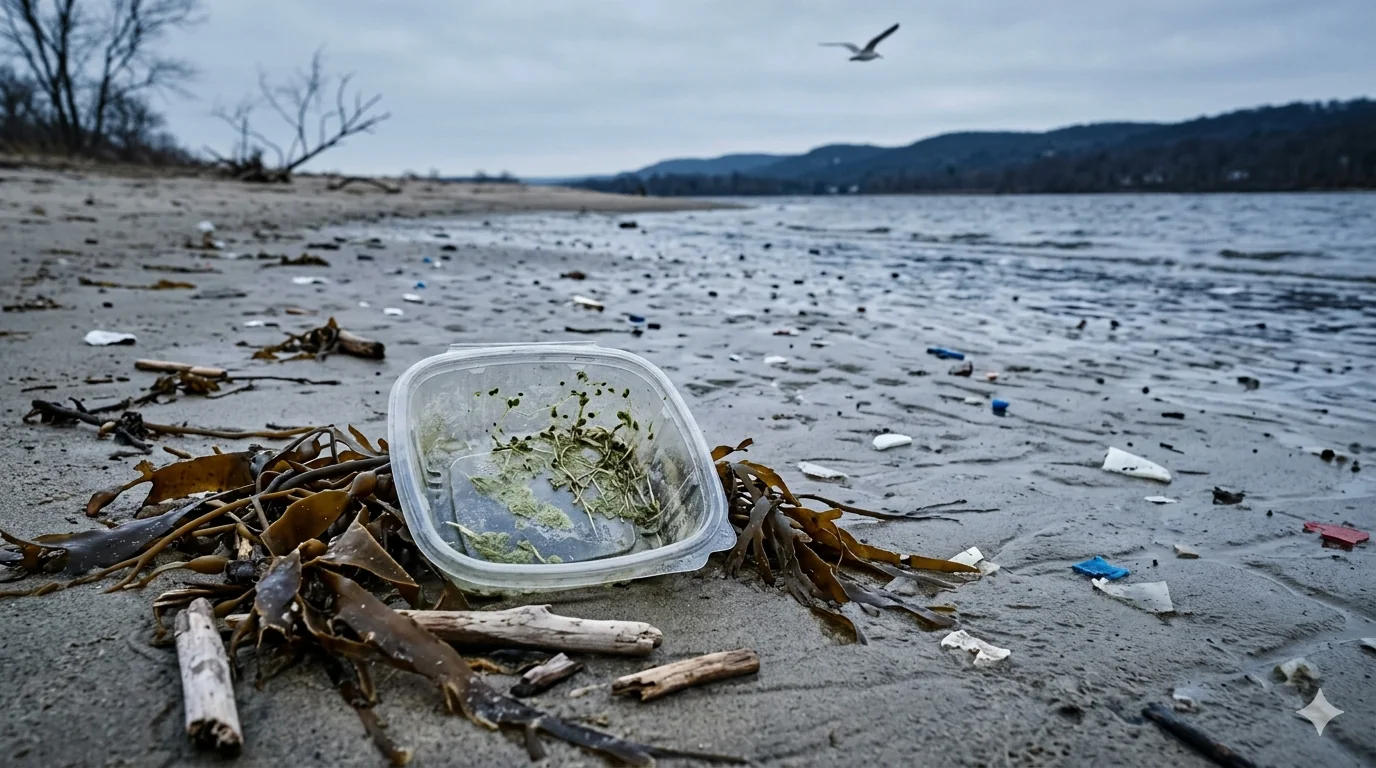
📍 Quick Answer
Plastic clamshells used for microgreens are PET-1 thermoform plastic, which has a national recycling rate under 9 percent according to EPA data. The clamshells look recyclable because they have a chasing-arrows symbol with the number 1 inside, but most municipal recycling facilities reject thermoform PET because it contaminates rigid PET (water bottle) recycling streams. The clamshells go to landfill or incineration. microGREEN FX uses 100 percent biodegradable plant-based containers instead, which compost in residential compost in 90 to 180 days.
Walk into any Whole Foods, Wegmans, Acme, or Giant in SE Pennsylvania. Find the microgreen section. Every single package is a clear plastic clamshell with a chasing-arrows symbol that says "1" or "PET". 🛒
Most consumers see that symbol and assume the clamshell is recyclable. Almost none of them know that thermoform PET has one of the lowest actual recycling rates in the entire plastic stream.
The EPA data is clear. Even when consumers diligently put clamshells in their curbside bin, most municipal facilities pull them out and send them to landfill because they contaminate the rigid PET (water bottle) stream. The chasing-arrows symbol does not match the actual recycling reality.
Why PET-1 Clamshells Are Different From Water Bottles 🥤
Both water bottles and microgreen clamshells are made from polyethylene terephthalate (PET). They both wear the same chasing-arrows-1 symbol. But they are not the same plastic from a recycling perspective.
Water bottles are rigid PET (rPET). They are processed by a specific recycling stream. Clamshells are thermoform PET, made by heating a thin sheet of PET and stamping it into shape. Thermoform PET has different melting properties and contaminates rPET when mixed in the same stream.
Most municipal recycling facilities in the US either reject thermoform PET at sorting or send it to landfill after sorting. The result is a clamshell that says "1" but ends up in the trash anyway.
The EPA Recycling Rate Math 📊
- PET water bottles: 29.1 percent recycled in the US (2018 EPA data).
- Thermoform PET (clamshells, deli containers): Under 9 percent recycled in the US.
- The remaining 91 percent: Landfill (most), incineration with energy recovery (some), or environmental leakage (small but significant).
- Time to break down in landfill: 450+ years for PET-1 plastic.
- Microplastic generation: Every clamshell breaks into measurable microplastic before disappearing.
What microGREEN FX Uses Instead 🌱
Our containers are 100 percent plant-based, compostable in residential compost or curbside compost programs in 90 to 180 days. The materials are sugarcane fiber and PLA (polylactic acid, a corn-derived bioplastic) for the lid, no petroleum-derived plastics anywhere in the package.
The containers cost us roughly 3x what a conventional plastic clamshell would. We absorbed that cost rather than passing it on because the math on plastic-free packaging only works if the customer does not get punished for the better choice.
When you finish a microGREEN FX container, drop it in your home compost or backyard pile. It is gone in 6 months. No microplastic, no landfill, no chemical leaching.
What "Compostable" Actually Means 🔬
There are 3 categories: compostable, biodegradable, and degradable. They are not interchangeable.
Compostable means the material breaks down into compost (organic matter that supports plant growth) within a defined time frame, in a defined environment (home compost, industrial compost, etc.). Our containers are home-compost certified, which is the highest standard.
Biodegradable means the material breaks down via biological processes, but does not necessarily produce compost. Many "biodegradable" plastics break into microplastic over decades.
Degradable just means the material breaks down somehow, including via heat or UV light, often into microplastic. This is the lowest standard and we avoid the term.
A Few Calibrating Questions 🤔
- When you put a microgreen clamshell in your recycling bin, are you confident it actually gets recycled?
- Have you ever looked at the recycling rate of thermoform PET in your county?
- Would you pay 50 cents to a dollar more per package if you knew the container was actually compostable in your home pile?
- Does the embedded plastic cost in your weekly grocery bill matter to you, or does that conversation feel abstract?
- If a microgreen producer absorbed the extra packaging cost without raising your price, would you switch?
Get Microgreens in Compostable Containers 🌿
Every microGREEN FX delivery comes in 100 percent biodegradable, home-compost-certified containers. No plastic, no microplastic, no landfill.